It was 11:30 pm. Earlier in the day, Anthropic had announced Claude Mythos and Project Glasswing. Things felt eerie.
I was at that point where my attention lapses between prompts were getting too large to do any meaningful work. I turned to YouTube as my late-night distraction while I waited for Claude Code to finish Flooperdoodling.
The World's #1 Sushi Restaurant That's Impossible To Book
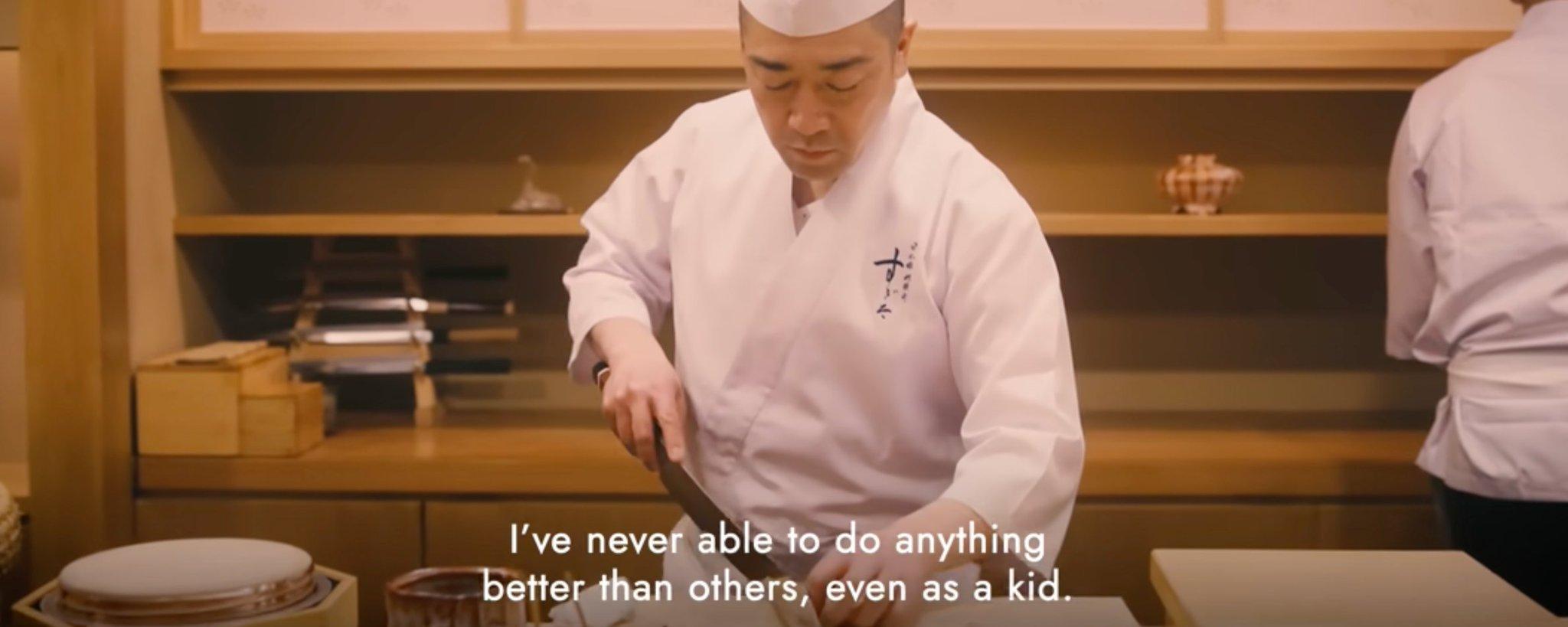
A 35-minute documentary by Alvin Zhou titled "The World's #1 Sushi Restaurant That's Impossible To Book" caught my attention.
The video follows Sushi Master Takaaki Sugita and his 4 apprentices throughout the day, as they prepare an Edomae sushi omakase dinner.
It visually captures the daily chores: cleaning the fish, filleting, trimming, salting, cooking the rice, and preparing the meal. But in the relationship between Sugita and his apprentices, it encapsulates so much more.
I don't want to take away from your experience of the video by attempting to summarize it. Watch it.
What I want to talk about is what it exposed about my life and career.
The End of Knowledge Work#
Knowledge work is coming to an end. We all know it. I didn't need a video to tell me that, and you probably don't need this essay to tell you. What needs introspection is what comes after.
Most of what we call knowledge work is information manipulation. Retrieve, transform, recombine, transmit. We dressed it up with fancy words like expertise, judgment, craft, or skill, but strip that away and the job is: look things up, apply them, move on.
A simple test: If the entire job a person does can be written down and executed by someone else, then yes, it was always just information. And if it was always information, it was always mechanical. We just didn't notice or call it out because the machine doing the job was a person with a salary.
Now the mechanism is an ever more capable model, and what's left of our jobs is whatever wasn't information in the first place. Which, for most of us, is not a whole lot.
And once that is done, beyond the obvious question of "what do I do for work", lies perhaps the most important question of all:
In a world where knowledge is solved for, what is your knowledge for?
Sugita appeared to me as a potential answer. But not because his profession is "AI-proof". A career cannot be just an ever emptier pocket of the things machines cannot do.
The question here is about meaning and the value we assign to the things we spent years learning. So here are the three things this video made visible. Three things that seem to survive when knowledge stops being our professional identity and main contribution to society.
What You Know#
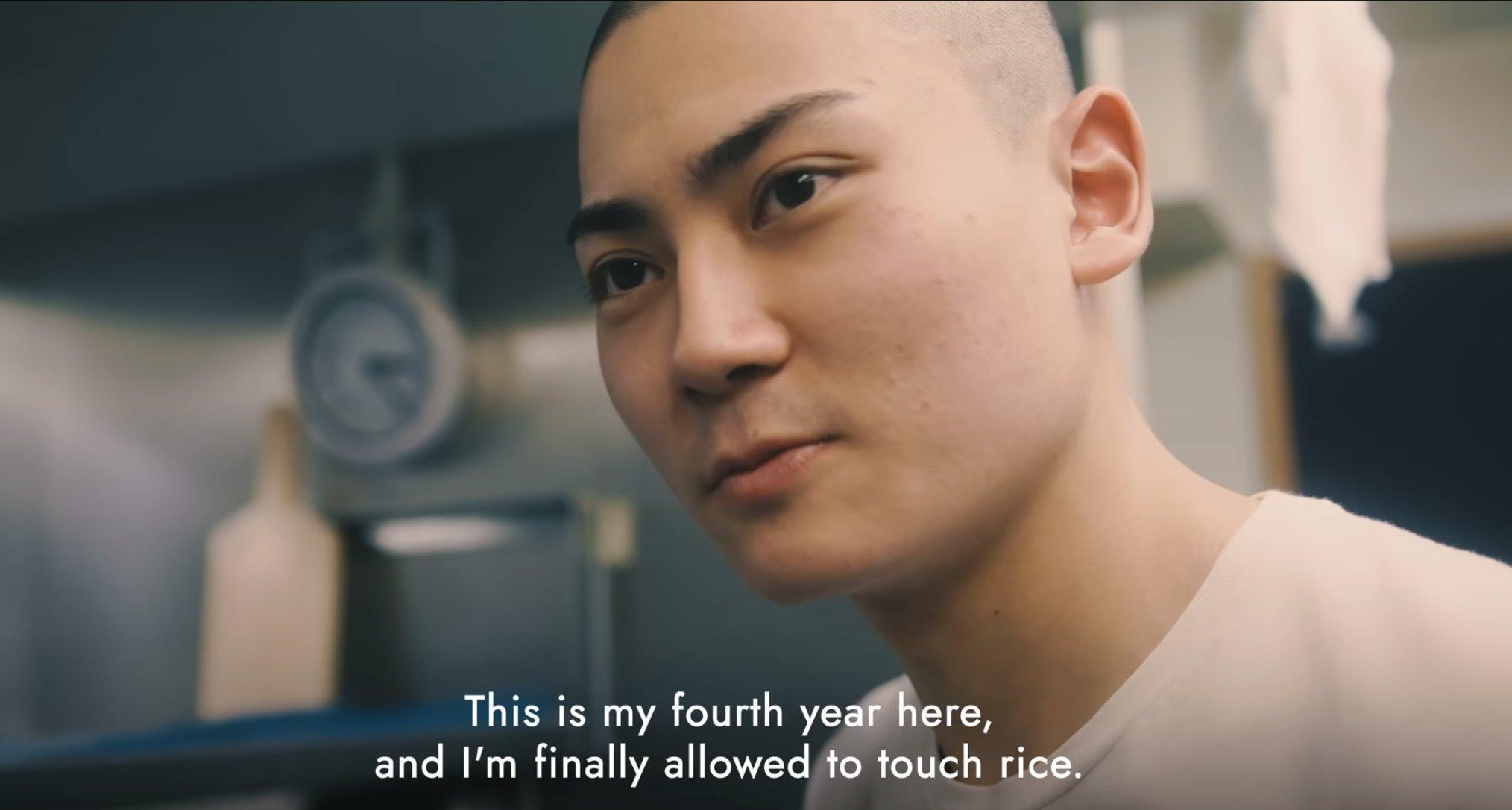
A traditional Edomae sushi apprenticeship is a multi-year journey. It takes up to 10 years to become a head Chef. I am not going to pretend for a second that I understand what goes into those 10 years. But what became obvious is the contrast to my expertise.
I went to college for 4 years and walked away with a degree in Computer Science. But that means what exactly? What is the real skill I walked away with?
Nothing.
Or almost nothing. I learned to turn finger movements over a keyboard into instructions a computer will follow.
What Sugita has isn't information about sushi. It's a set of habits, perceptions, reflexes, and relationships that make sushi as a byproduct. You could read a manual on everything he "knows", and still not be able to make sushi like he does.
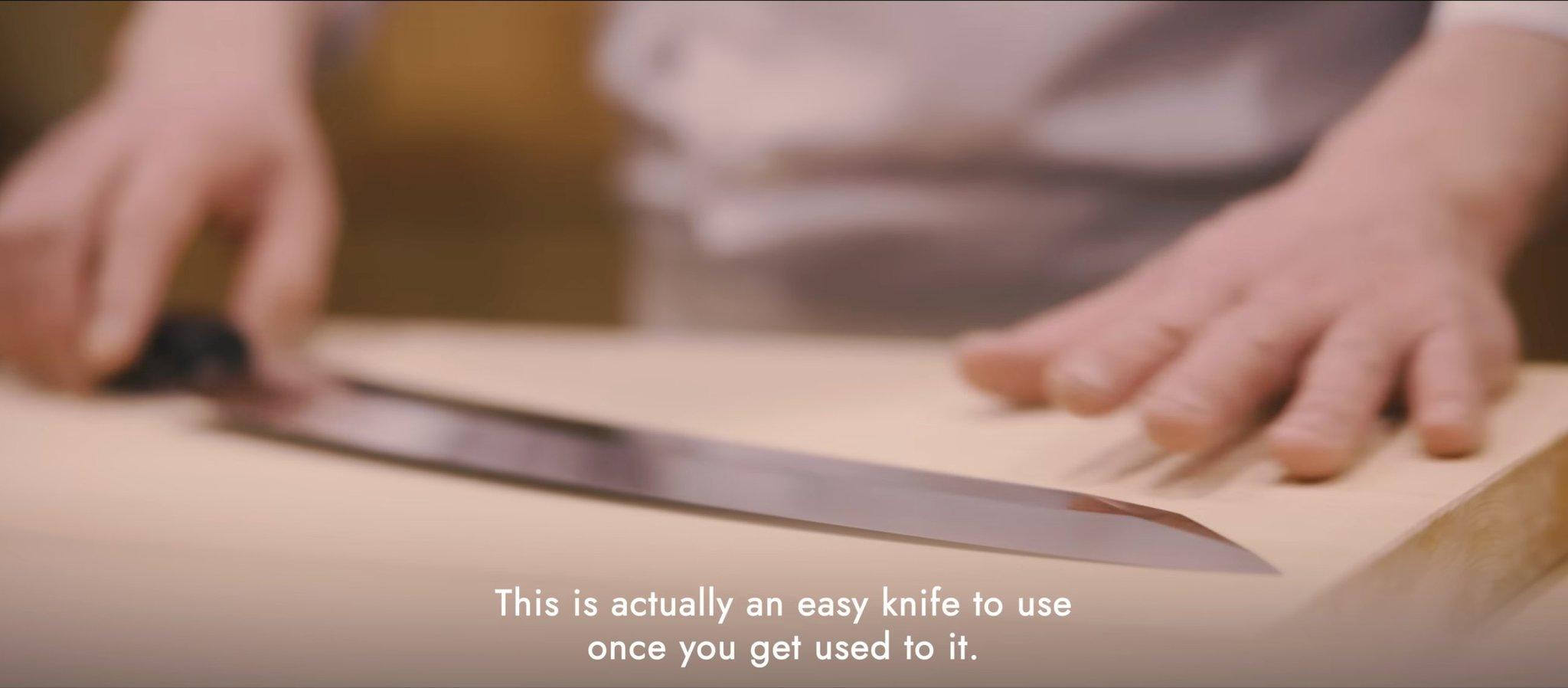
He reads the rice pot by smell and sound because the lid cannot be opened. His knife has a curve that, over the years, taught his hand to cut in arcs. None of this transmits through text.
Mastery is not information. The closest fitting word I can find is intuition.
Sugita's ten years are not stored anywhere outside of him. They are him. The knowledge and the person are the same thing. You cannot extract the skill from the life that produced it. The years meant something because they became him.
My four years did not become me. They became a credential I carry. I may still have the knowledge, but the knowledge and I are separate things.
It existed before me in textbooks and documentation, and it will continue to exist in models that now act on it far better than I ever could. I was a vessel it passed through.
Sugita's ten years made something that only exists because he exists. Mine made me fluent in something that was always going to exist with or without me. His mastery isn't better than mine or yours. Ours was never mastery in the first place.
What You Cherish#
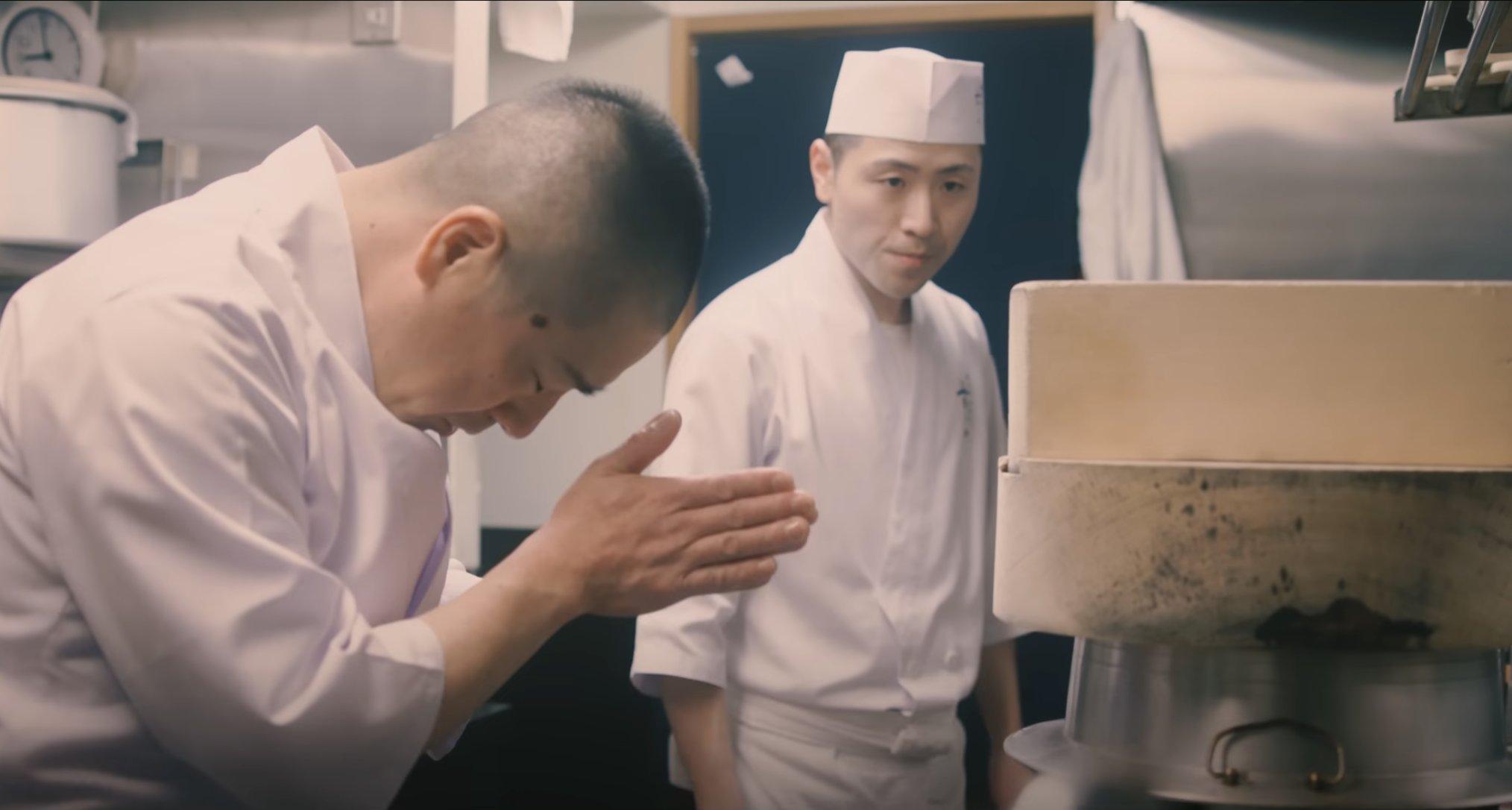
Minute 16 contains a shot so striking it feels strange:
Just like the trees or the air, we also believe there is a god in rice
Here is the man many consider to be the best sushi chef in the world, bowing to a pot of rice he is about to cook.
There is a deep sense of reverence that appears in several parts of the video. Sugita has instructed his apprentices to use every part of the fish as a sign of respect for that fish's life. Or ensuring everyone in the restaurants sharpens their knives every single day.
I revere my elders and cherish my family. But I can't find any parallel in my work. It is not that I don't bow to my computer before opening it. It's simply that reverence and work feel fundamentally incongruous to me.
The closest thing we have is "passion". But for all that "passion" permeates our knowledge careers, it is so far from true reverence. Passion is what we call it when we're grinding; reverence is what you feel when you're not.
The distinction is even clearer in the semantics. We've built a whole professional identity around a word that means "intense but temporary feeling about something". And we use it specifically because the word for "stable devotion to the thing itself" would expose the fact that we don't have any.
Reverence is what makes mastery possible, because mastery takes decades, and decades require a reason to keep showing up every day. You can't spend forty years on anything because nothing you work with is sacred to you, and passion wasn't ever going to carry you that far.
Who Admires You#
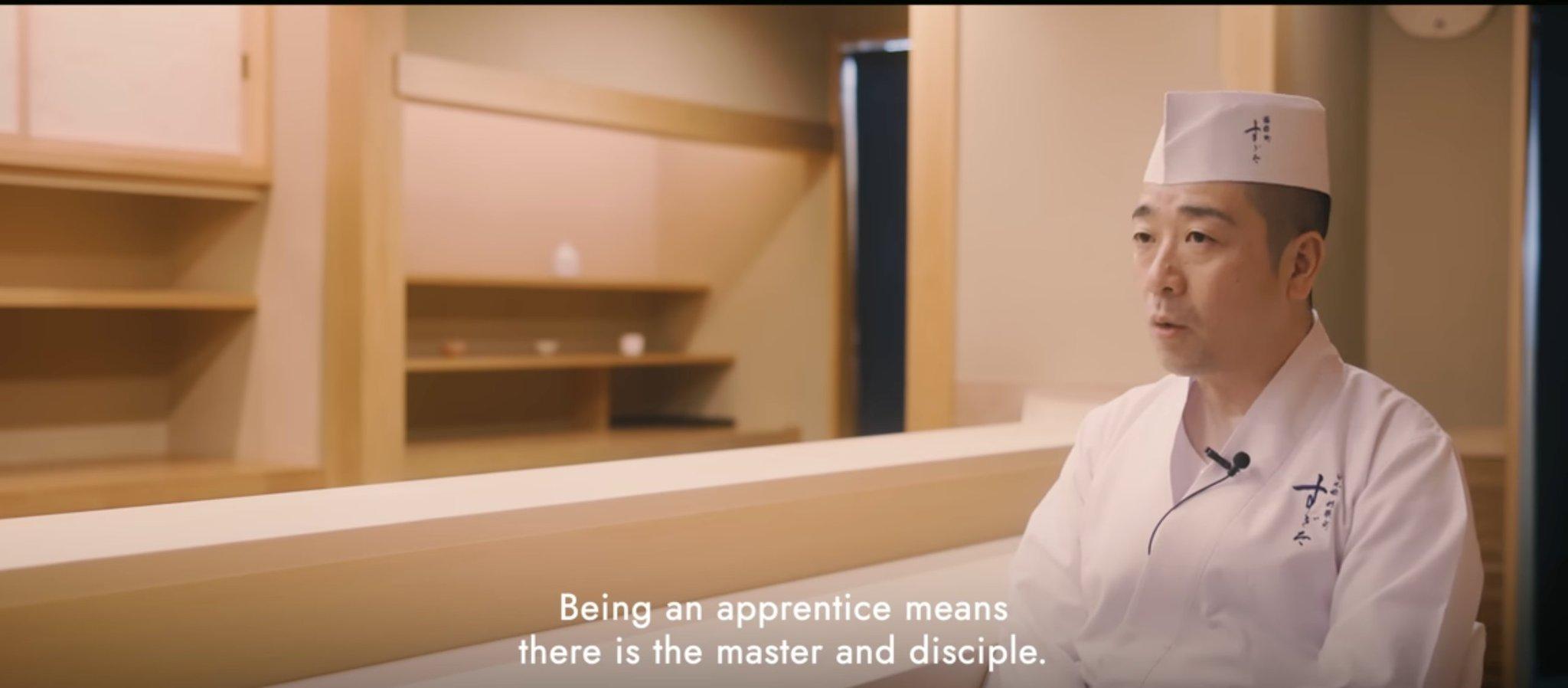
You can fake mastery, you can claim reverence, but you can't force people to admire and learn from you. The proof of Sugita's life isn't in the awards or the reviews or the impossible-to-get-into waiting list. It's in his four young apprentices who chose to spend the best years of their lives standing next to him.
There is not a remotely similar concept in our careers. Nobody is apprenticing for a decade to become a knowledge worker. And it's not because we're lesser people or because our culture does not work that way. It's simply that there's nothing stable enough to orient a decade around. The tools change, the judgment gets matched by a model, or the profession entirely disappears. There is no star to navigate by.
Minute 29 contains perhaps the most beautiful quote in the video:
The reason I got into this job in the first place, wasn't because I wanted to be a sushi chef. I just loved making people happy, I guess that's my nature. Ever since I was a child, I've liked seeing people smile. And if they are smiling because I made something for them, that makes me the happiest.
The ten years aren't for the sushi. Sushi is the medium. People are the point.
And that is what the apprentices are actually inheriting. Not technique. Not an orientation. They are inheriting purpose. A reason that work is worth doing.
The question I opened with was what is your knowledge for?.
But Sugita's answer reframes it. It is not:
what your knowledge is for
It is
who your knowledge is for
For him, it has a direction. It points at a face: his apprentices, his customers.
Most of what we call knowledge work points at nothing. It produces outputs that feed into other outputs that feed into dashboards that nobody looks at. There is no face at the end of it. And without a face, there is no reason for anyone to spend ten years learning from you, because there is nothing to inherit that is worth ten years of a life.
Where To From Here?#
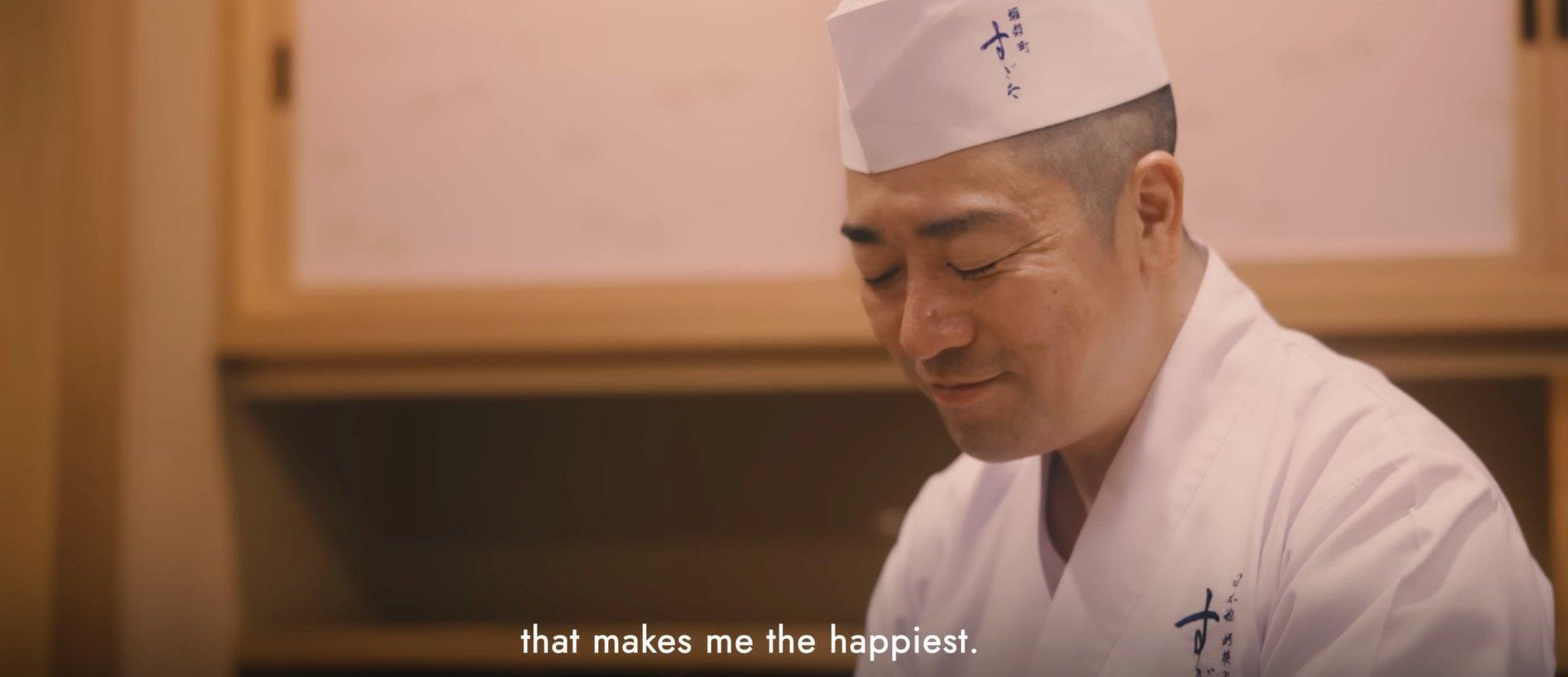
I finished the video with an odd feeling of smallness. The feeling wasn't defeat. It was a recognition that the hard questions that loom are not new. They've been around for all of history. Suddenly, Claude Mythos, Project Glasswing, or whatever model may come next seemed to matter less.
There will still be meaning and mastery in a post-AGI world. There has to be. But it won't arrive as a default, and it won't look like what came before.
I will not tell you that living a "simple life" is the way to find meaning in a post-agi world. I will also not encourage you to pick up a craft or become a sushi apprentice.
I will not pretend to have an answer.
But if I must leave you with anything, I leave you with three questions.
In a world where knowledge is solved:
- What do you really know?
- What is worth your decades?
- And who is it for?